NOTICE

All material in this blog falls under the laws of Copyright. Each Artist represented retains their own copyright to their images.Reproduction without their written consent forbidden by law.

Sunday, October 16, 2011

Phoneography ..part two

My brother has an auto body shop and a tool chest taller than me. I asked him why he needed two drawers of screwdrivers to which he replied that each one does a different job. At my level of mechanics, I have only two. On his level, he has them and calls on each to do a  different job. 

Photography has become that way too. At one time only the large format to today's ever growing selection of camera types, we achieve different looks with different approaches that each one delivers.  Some help to direct our vision, some change our tactics and some free us. Large formats bring us to those pensive moments, a slower attention to detail and deliberate compostions... 35 to speed of subjects and our reactions with variety of views, plastic cameras to whimsical haphazard moments sometimes happy accidents. Like my brother's screwdrivers, each does a different job and often, with it in hand we search and focus for just those. 


Ahumada Enrique sees his path with "Menage a Trois" or the square of three...


which turned not only into a series but an App for the Iphone/Ipad that creates its layout design.

In his words..." this is a series is a result of an extreme sense of joy that I experience in the magic alignment of three elements: my eye, my Iphone camera, and my subjects"

Smart phones seem to have a spontaneity and public acceptance that other formats don't. In a crowd, on the street, in buildings, lifting a smart phone doesn't draw the attention that lifting your 35mm does. It has become almost unnoticed, a normal, unquestioned part of today's life, allowing reaction without hesitation to what we see. In view of all that is happening on the global changes in governments and movements, it has become a strong tool that through its freedom of visual capture, changes the world like no other camera before it. In time as it continues to develop, it becomes its own art form and in the world of electronic media, internet, Ipads, Smarter phones and whatever else comes, takes its place as a tool for advertising.

Thursday, September 15, 2011

Phoneography... part one

Anyone aware of the history of photography doesn't have to be told how far we have come. From the "Camera Obscura" to film and now digital, it has provided a steady growth of expression with newer techniques and tools pregress. For those who pursue its medium a new forms of art or looks emerge  with every advance .

Across its brief 150 years apprx, it has struggled in its acceptance as art, coming into its own buyer's scene within the last 20 years or so. It became the realm of masters who were capable of handling the equipment along with its technical procedures and could successfully express and produce fine photographic art. For the most part, it took years of experience.The struggle of films,chemistry,and technique kept the masses at a great distance. Enter digital and with it a  new door opened allowing new artists who might not have be here had media remained the same. What did remain for a long time however, was the tool.

A new tool is born..the Cell Phone: Tool for the masses..

Unobtrusive, at hand,capable of not only processing an image and tweaking its look, but immediately publishing it from within and on the spot, it gives birth to a whole new world of potential artists, some of which have probably never been photographers before. Every person I know has at some point shown me his "Pocket Images" some good, some bad, all fun but mostly random . In their hands, an instant photographer;  In others... an artist's expression, and these are some of what can be done through their eyes and experience taking this new tool to higher level :


Chris Hudson  an award-winning Art Director and Creative Director at advertising agencies in London and New York, is a member of the Royal Photographic Society and London Independent Photography.
With his keen eye for color, he finds new freedom with his cell phone and some of the apps that can be had. Here is the  Hipstamatic app. This from a flower series is part of his current book project. 


While in Iceland, he was so impressed by the quality of the phones ability to produce a quality image that he shot half of his trip with his iPhone.


Experiencing the same in my last travel, my assortment of lenses remained in my bag. The freedom and fun of my phone allowed me to see subjects in a whole new light, a different approached unencumbered by multi-equipment decisions and with no one to be suspicious of who I was and what was my motive, I was free.


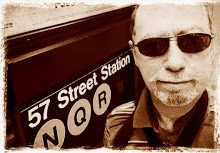
Apps allowed processing after capture and adding a frame, to re-interpret scenes with a different light. This famous New York icon takes on a different look than its predecessor one hundred years later.


Imagery while waiting for lunch and published before it comes opens a whole new world with its a very addictive visual fever. More than just a sketch book, it becomes a final product.


But we are not just one brand of tool as it is really the person behind them that matters most. In capable hands this new tool, like discovering something other than a paintbrush, creates a whole new way of painting.  Donna Callighan  has been a successful professional photographer for over twenty years. Her approach in this new form is rather than use an in phone app, she processes her "cellimages" in Photoshop with her unique style.


This is part one of of this series of Phoneography. If you wish to contribute images for review, contact me through my profile...My thanks to both Chris and Donna for their contribution. 

Monday, April 11, 2011

Featured Artist...Jeff Weinstock

I heard it said that inside a great cinematographer or videographer is a great photographer to start with. That part proves out in Jeff Weinstock's work. His attention to composition and color saturates his landscapes showing us scenes begging to be a "set "


"I began working as a still photographer after a thirty year career as a nationally recognized documentary and commercial cinematographer. When the time came to close that door, in 2003, another opened as I turned to still photography to fill the void left after thirty years of creative filmmaking."
Starting out as a cameraman for the Washington bureau of NBC News, at 24, he was assigned  to cover the Ford administration. Some time later he was transferred to to the network's New England bureau where he also began to freelance for major clients. There he began his interest in still work.
In an era where most still shooters are looking at motion as their new expression, Weinstock takes the reverse with a thirty year track record behind him. 

"... the transition to still photography freed me from strictly structured content, budget constraints, working in large collaborative groups, and bringing to life the concepts and visions of others.  I've spent the last six years traveling to areas that have drawn me in by their unique natural beauty and the ability to shoot only that which touches my creative sensibility and personal esthetic."
 

His sensitivity to his surrounding is best expressed by the light he captures. It stands out dominate painting a portrait of the place he is drawn to. One of them being The Olympic Peninsula in N.W.Washington.


"From November, 2008 thru October, 2009 I spent over two months on The Olympic Peninsula in N.W. Washington photographing it‚Äôs rain forests, the Olympic National Park, the Olympic Mountain Range, and miles of broad coastal beaches battered by fierce winds and waves from winter storms off the Pacific.  That now completed project had become a passion  and from it grew an artistic and personal connection with the approximately 6800 square miles of the bio-diverse Peninsula.  The breath-taking beauty of this bio-gem is everywhere, and in certain places it‚Äôs beauty so mystically magnificent as to touch one on a spiritual level."

His commitment to this vision is total, having left his home in Boston in October 2010 and moving to Portland, Oregon to live in the Pacific NorthWest and continue his pursuit. His philosophy on his work is simple....
"My design is to share my vision of the ordinary and the extraordinary with those who find some value in the photographic images I creates. No more, no less."


more can be seen    here

Sunday, April 3, 2011

Featured Artist...David Fine

Some see small things in big subjects and some see big things in the small ones, David Fine sees   bold graphics in his.

Hailing from Georgia, he applies his more than twenty years experience in the commercial world to his art. His focus is on three areas:


*Things That Rust and Splinter
*Things That Splinter
*Nature and Landscapes


"All 3 areas of study can be summed up in the exploration of the impact of time on our landscape through things that rust and things that splinter.  I am drawn to abandoned places that hold secrets of yesterday where time has clearly created new textures, colors and shapes that fold into our landscape.  I focus not only on shape, texture and color, but on the interaction of the elements within our landscape. I have always been drawn to the desert and the West.  Those that visit the desert either love it or hate it, with very little in between.  Every visit I take leads me in a different visual path where at times the silence is deafening, the light is brilliant, and the moment of capture is clear. "

These two images are from his series "The Pass", a small collection of views of an abandoned 1937 Flat Head Ford truck.
" I originally found this truck as I was hiking through the desert in Southern California near Death Valley. The gentle lines and shape of the truck create their own landscape, color pallet, texture and feel in one of nature’s most challenging environments. "


He works in medium format, first film and recently digital seeing his subjects from the wide perspective a 40mm gives. 

"Walking the streets of Bodie many times over, this was perhaps my coldest visit ever.  I always have a new experience there, and this time was no exception.  While a snow storm closes the pass, and the wind blows cold as ice – there is nothing like trying to manipulate a tripod and dials on a camera."

These are Wheel in the Sky and Time Spoken..


More of his work can be seen ...............HERE

Monday, March 21, 2011

Featured Artist...Stephen Tomasko

Images speak differently to each of us. Sometimes they take on other meanings not intended by their creators. This week's featured artist, Stephen Tomasko puts it best...
"For me, making photographs, especially involving people or the things that people make, is about story telling. As with any type of story, if engaged, people will bring their own history and sensibilities to round out a narrative. My goal then is to make an image beautiful and compelling enough to make the viewer want to linger, and in some way then make it their own. "
I have passed this scene many times in many cities,someone's portrait being drawn or painted.The subject sitting in anticipation, trying not to make eye contact with the viewers whose faces might reveal the results. Here she is either complacent or on edge pressing on her elbow, her hands wrenched hoping for the person she wishes to be appear on paper. I have stood in this same spot as part of this audience. Not wanting to make eye contact I too have felt the same apprehension as she does in this image making it hard to witness the end. It's a uncomfortable barrier that I can however, safely cross here via this photograph thanks to the recognition of the moment Tomasko captures. It works for me, and in this comfort zone, as Tomasko says, makes me linger. 

"Boys and Girls" is about the roles that we play in our culture. It is also about the excitement and terror of relating to one another. These images were all found in the American landscape, processed minimally, and printed full-frame. Aside from being true, they are also better than any I could have concocted in my own head. Of course, they are interesting as images because of the composition and the framing, and the recognition of and reaction to the light. These things I can do. It’s for the continued supply of American weirdness and wonder that I’m reliant, always surprised and forever grateful.


Stephen Tomasko makes photographs of the natural and the man-made. He has created bodies of work with subjects as diverse as the steel and automotive industries, the life and landscape of the American city streets, and pristine blooming gardens. Tying the work together is a vision of carefully seen straight photography, presented full-frame, with minimal processing. 


For more his work go here

Friday, March 11, 2011

Featured Artist...Denis Olivier

Bordeaux is mostly known for its great wine. It's also known for great photography. For wine suggestions, contact me offline..for photography look towards Denis Olivier, our new "Featured Artist."


Originally born in Royan,France where he was introduced to photography through his parents, he started by drawing later painting taking part in some exhibitions. By seventeen, he began to photograph turning his attention to it as a more interesting area of study after finnishing three years of Biochemistry. Attending the Poitiers School of Fine Arts he meets Alan Fleig who introduced him to photography as an art form.

"...felt a need to practice photography, and with a friend we spent a lot of time learning how to develop films and photographs. We did sessions with models, scenery, and discovered France."

He continued on and trained with Phillipe Salaun, the assistant to Robert Doisneau   
"I did some jobs for organizations, shows and commissioned works. I then started in December 1995 working with computer graphics and made use of the Internet.
I worked in artistic direction for several years, then digital cameras came along and I found a way to work quickly and experiment without using too many resources such as film, chemicals, photo sensitive paper and of course the wonderful resource of water."  


His work appears as classic Zone system for those of us who remember that. Squares, my favorite, seem to dominate his frame and help to focus on, this is his view exactly as he saw it.  


Apart  from his classic approach, he also has a series of manipulated images making creative compositions by blending them together, some whimsical, some haunting in his Dreamspace Reloaded series. 
He has been well exhibited in France, appearing in magazines and collections. 
More more of his work can be seen here


Monday, February 28, 2011

Featured Artist...John A. Benigno

"For me, the art and craft of photography are self taught.  Primary influences come from the writings and works of Porter, Feininger, Steichen, and Strand, to name a few."
 
These are the opening lines of this week's featured artist, John A. Benigno. Taken from his resume, they help to define the inner vision he expresses on paper. More than pictures, they strike me as portraits of the souls who either have or still occupy those spaces.

These are from his collection,"Adobe Churches".


"Adobe is among the most ancient of building materials.  Of the earth, and in need of constant care, 
it is ideal for structures determined to endure as expressions of faith and culture.There are hundreds of adobe churches scattered throughout the high desert of the American Southwest.  A few, still in existence, date back to the mid-1700's, while many others were established as far back as the early 1800's.  Some are large, imposing structures, but most, built by parishioners, are small and modest. Each is unique and worth exploring.  They stand as symbols of deep faith, homage to centuries old customs still practiced in towns and villages found throughout New Mexico."

John's interest in photography started as a child. His dad brought him one of the first Polaroid cameras. Toady he teaches photography at several Community Arts Centers in Pennsylvania. His work appears in many galleries and private collections throughout the country and published in various magazines.

Classic in approach, film and darkroom, today he crosses over to digital output. Still using film, he scans and then applies his formula in Photoshop, recreating his toned or tea stained technique that he applied to his silver prints. 

"Perhaps, because much of my work tends towards realism, my photographs often are described as traditional.  In fact, many of my primary influences come from the writings and works of photography early masters, including Porter, Feininger, Steichen, and Strand, to name a few.
While I welcome a comparison to the past, realism is merely a means to an end.  Rather, I believe that my artistic vision is driven more by my background in the social sciences, especially anthropology and history, than by my great admiration for photography's early masters.My real interest is to capture timeless moments in the landscape, and, if the land has been influenced by man, to stimulate curiosity about how, when and why." 
His other works include landscapes from the Southwest,the Amish country,Seascapes to name a few. His theme follows throughout as does his philosophy.

"Making a photograph is a struggle between my mind’s eye and the subject.  Eventually, they merge in a peaceful coexistence.  The resulting photograph becomes more than the subject.  The viewer can’t possibly travel to this place with me -- it is mine.  Instead, hopefully, the image before them will ignite their own internal journey to a time and place of their own. The key is to look"


More of his works can be found here.